Nuts
Nylon Insert Lock Nuts (Nylock) Manufacturer, Wholesaler, Supplier & Exporter
Nylon insert lock nuts resist loosening under vibration by gripping the bolt thread with a nylon collar. We manufacture and export these to DIN 985 / ISO 10511, along with all-metal prevailing-torque lock nuts for high-temperature applications.
Nylon insert lock nuts work by interference, not friction — the bolt thread has to physically deform the nylon collar as it passes through, which is exactly why a nylon lock nut should never be reused after removal. Once the nylon has taken the shape of the thread, it no longer grips a fresh bolt with the same prevailing torque, even though the nut looks completely undamaged.
Temperature is the other limiting factor buyers overlook: nylon inserts soften and lose their locking grip well before most metals reach their own performance limits, which is why engine bays, exhaust-adjacent mounting points, and other elevated-heat locations call for all-metal prevailing-torque lock nuts instead, even though nylon-insert nuts are cheaper and more common.
Minimum Order — Container Quantity (Approx.)
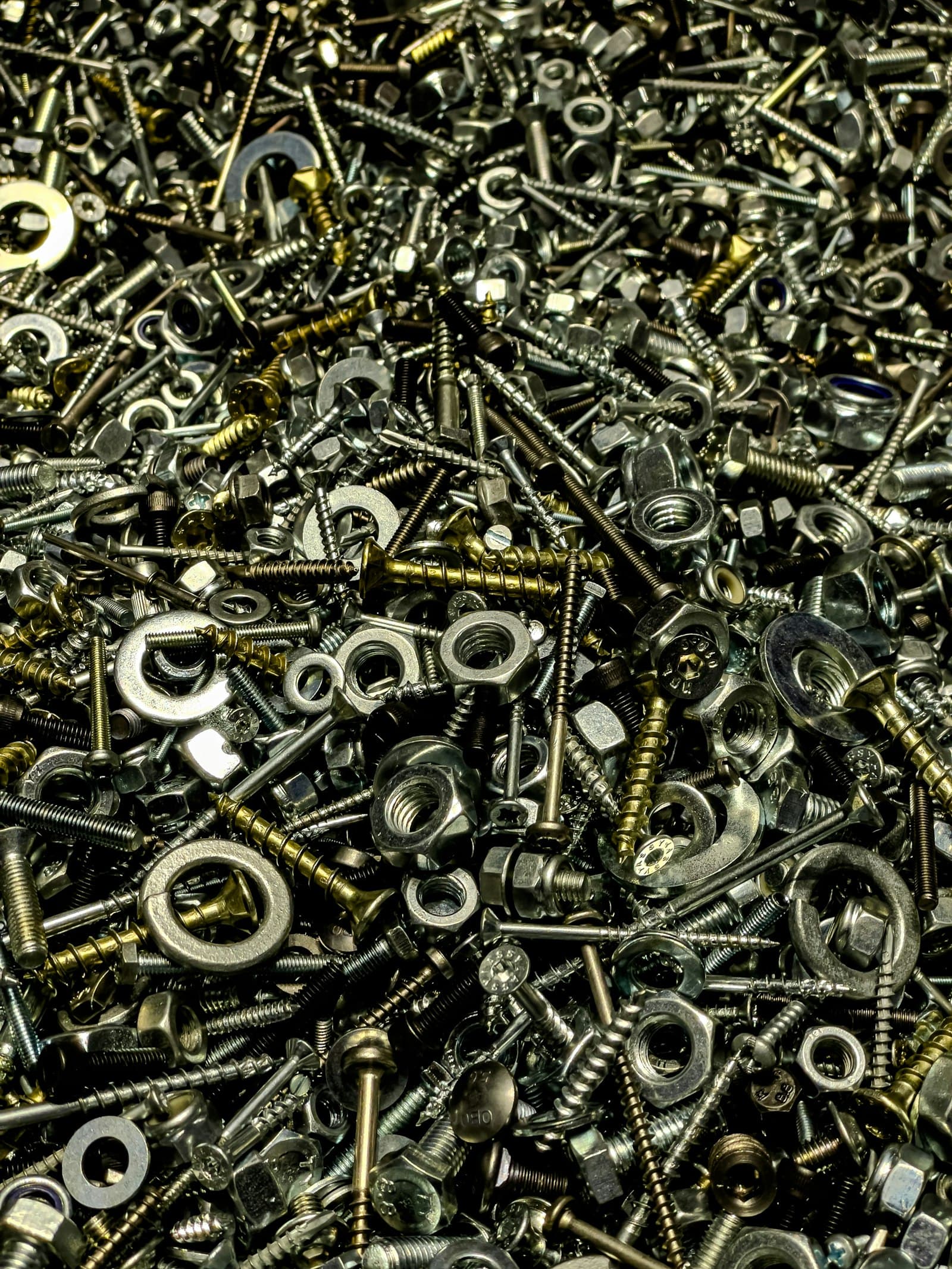
A standard 20ft container (~20 tons) holds approximately 1-1.4 million pieces of nylon insert lock nuts in common sizes (M10-M12). Exact quantity depends on size and is confirmed at quote time.
You don't need a full container to order. Hurain Engitech & Trade — the group Global Fasteners Exports operates under — regularly ships smaller, partial-container (LCL) orders of just a few pallets or boxes for buyers who don't yet need FCL volume, consolidated with other cargo to keep freight cost reasonable.
Specifications
Standards
DIN 985 (nylon insert), DIN 980 / ISO 7042 (all-metal), ISO 10511.
Size range
M3 to M36 metric; #4 to 1.5" imperial.
Grades
Class 8 and 10 steel bodies; A2/A4 stainless with nylon or metal locking.
Temperature range
Nylon insert rated to approximately 120°C; all-metal variants for higher temperatures.
Applications
Vibration-prone machinery
Motors, pumps, and conveyors where vibration can back off standard nuts.
Automotive & transport
Suspension and chassis fastening requiring vibration resistance.
Solar & structural mounting
Outdoor structures subject to wind-induced vibration.
HVAC equipment
Fan and compressor mounting.
Materials Available
Steel
Corrosion-resistant
Prevailing-torque and vibration-resistance performance verified per DIN 985 / ISO 10511 on sample batches.
How We Manufacture & Export This Product
- 1
Spec confirmation
Confirm nylon-insert vs all-metal locking, size, and grade.
- 2
Machining & insert fitting
Nut body machining followed by nylon collar insertion or metal-deformation locking feature.
- 3
Testing
Prevailing-torque testing on sample batches.
- 4
Export packing
Bulk cartons palletized for container shipment.
Export Track Record
Supplied to automotive, HVAC, and solar-mounting buyers requiring vibration-resistant fastening.
Real-World Use Cases
Vibrating machinery and motors
Motor mounts, pump housings, and conveyor frames where standard nuts back off over time.
Automotive and suspension fastening
Chassis and suspension joints subject to constant road vibration.
Outdoor structural mounting
Solar racking and signage exposed to wind-induced vibration over years of service.
Common Mistakes Buyers Make
Reusing a nylon lock nut after removal
The nylon insert deforms permanently to the first bolt's thread and loses locking torque on reinstallation.
Specifying nylon insert nuts near heat sources
Nylon softens well below the temperature many metal components tolerate — use an all-metal lock nut instead.
Assuming any 'lock nut' is vibration-tested
Prevailing-torque performance varies significantly by design — confirm the nut meets DIN 985 / ISO 10511 rather than assuming generic 'lock nut' branding is sufficient.
Glossary of Terms
- Prevailing torque
- The resistance a lock nut applies to rotation even before it contacts the clamped surface, which is what resists vibration-induced loosening.
- Nylon insert (Nylock)
- A nylon collar molded into the top of the nut that deforms around the bolt thread to create prevailing torque.
- All-metal lock nut
- A lock nut that achieves prevailing torque through a deformed metal thread section rather than a nylon insert, suited to high-temperature applications.
Quality Inspection We Perform
Dimensional inspection
Thread gauge, length, diameter, and head/drive geometry checked against the specified standard.
Material verification
Grade and material composition confirmed against the order specification, with mill test certificates on request.
Mechanical testing
Tensile strength, hardness, and proof-load testing on sample batches, particularly for structural and high-tensile grades.
Finish & coating check
Plating thickness, galvanizing coverage, or passivation quality inspected before packing.
HS Code & Customs Classification
Most fasteners fall under HS Chapter 73 (articles of iron or steel) or Chapter 74/76 for brass and aluminum items — the exact 8-10 digit subheading depends on the specific product and material. We include the HS code on the commercial invoice; confirm the applicable import duty with your customs broker, since rates vary by country and trade agreement.
Packaging & Export Labeling
Export packing is chosen to survive ocean freight and container loading without corrosion or damage: corrosion-protected paper or oil coating where needed, then cartons, drums, or bulk bags, palletized or crated for the container. We can match specific labeling, barcoding, or carton-marking requirements for OEM and repeat buyers.
Countries We Export Nylon Insert Lock Nuts To
View all markets →Buying guide
How to Choose a Reliable Nylon Insert Lock Nuts (Nylock) Manufacturer, Wholesaler, Supplier & ExporterWhy nylon insert lock nuts and all-metal lock nuts aren't interchangeable, and what to verify before ordering vibration-resistant fasteners in bulk.
Frequently Asked Questions
Related Products
Ready to order Nylon Insert Lock Nuts?
Send your quantities, grade, standard, and destination port for a quote.